
PEM Fuel Cell Stack Assembly: Bipolar Plate Alignment | H2Gatech
A PEM hydrogen fuel cell stack is built by bringing many individual cells together in a repeatable arrangement. Each cell needs the right electrical contact, gas pathways and sealing. A small positioning error in one layer can affect the layers that follow.
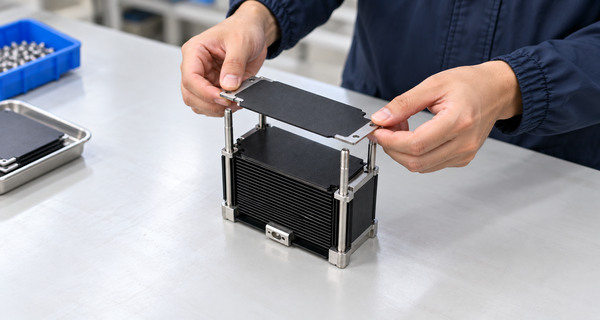
The accompanying H2Gatech video focuses on one simple but important action: checking the direction of a bipolar plate before assembly continues. This article explains what that check is for and how it fits into the wider fuel cell stack assembly process.
What Goes Into a PEM Fuel Cell Stack
The membrane electrode assembly (MEA) is the electrochemical core of a PEM fuel cell. Depending on its construction, it includes the membrane, catalyst layers and gas diffusion layers (GDLs). The bipolar plates sit on either side of each cell. They help conduct current and guide hydrogen and air through their flow-field channels. Seals around the active area keep the gas paths separated.
One cell produces a relatively low voltage, so multiple cells are connected in series to make a useful stack. The precise component arrangement varies with the stack design, including whether GDLs and seals are supplied separately or integrated into the MEA.
The Main Stages of Fuel Cell Stack Assembly
The following is a general overview. The approved drawing and work instructions determine the exact sequence, dimensions and compression settings for a specific stack.
1 Check the components and their orientation
Before stacking, the assembler identifies the anode and cathode sides, the plate orientation, the location of ports or manifolds, and the intended position of each MEA and seal. The video shows a check of bipolar plate direction at this stage. Making the check before placing the plate helps prevent a reversed flow-field or misaligned opening from being repeated through the stack.
2 Align each layer
Bipolar plates, MEAs and seals must match the stack's alignment features. The active area should sit in the designed position relative to the flow field, while the sealing surfaces and any gas openings must line up. Edges should remain flat and free from visible damage or contamination during handling.
3 Repeat the cell arrangement
The specified sequence is repeated until the required number of cells is reached. Keeping the same orientation from one cell to the next is essential because the plates connect neighboring cells electrically while maintaining the intended gas paths. The number of cells depends on the voltage and power requirements of the particular design.
4 Secure the stack with controlled compression
End plates and fastening hardware hold the layered assembly together. Compression must follow the stack design: insufficient contact can affect electrical performance and sealing, while excessive or uneven compression can stress the MEA, GDLs and seals. A universal torque value should not be applied across different models.
5 Verify the finished assembly
After assembly, appropriate checks may include dimensional inspection, electrical checks, gas-tightness testing and a controlled performance test. The acceptance criteria should be defined for the product rather than assumed from a video or a different stack model.
Why Is Bipolar Plate Orientation So Important
A bipolar plate does more than separate neighboring cells. Its channel pattern and openings help deliver reactants to the MEA and carry current between cells. If a plate is flipped or rotated incorrectly, the intended flow-field and manifold arrangement may no longer match the adjacent components. That can compromise sealing, gas distribution or electrical contact.
This is why the orientation check in the video deserves attention. It is a short visible step, but it protects the consistency of the entire layered assembly.
Planning a Stack for Your Application
When discussing a custom PEM fuel cell stack, share the target power and voltage, duty cycle, space constraints, cooling approach and available hydrogen supply. If you already have a cell or stack drawing, include the MEA dimensions, sealing concept and required test conditions. These details help define a build that can be assembled and evaluated against clear requirements.
H2Gatech supplies hydrogen fuel cell stacks and membrane electrode assemblies for a range of applications. To discuss a standard or customized configuration, send us your application details and drawings at Info@h2gatech.com.
Frequently Asked Questions
Is stack assembly the same as installing a fuel cell system
No. Stack assembly means building the electrochemical stack from its cell components. System installation means integrating a finished stack with hydrogen supply, air delivery, controls, cooling where required and the electrical load.
Can I determine the assembly torque from the video
No. Fastener torque and compression targets depend on the specific stack design, materials and sealing geometry. Use the applicable engineering drawing and approved assembly instructions.
What does the bipolar plate do
It provides electrical conduction between cells and contains flow paths for the reactant gases. Its position and orientation must match the surrounding MEA and sealing arrangement.
Editorial Notes
Primary keyword: PEM fuel cell stack assembly. Suggested image alt text: Bipolar plate alignment during PEM hydrogen fuel cell stack assembly.
The cover is generated illustration. Embed the actual assembly video near the introduction. If presenting the page as factory footage, use a still from that video as the cover. Confirm any model-specific process details with the engineering team before publication.
Technical reference: U.S. Department of Energy, Parts of a Fuel Cell.