
Inside H2gatech's MEA Manufacturing Facility
From Process Development to Controlled Production
A membrane electrode assembly is thin, material-intensive, and sensitive to how its layers are prepared, aligned, joined, handled, and inspected. For a buyer, a factory tour should therefore answer a practical question: how does a supplier turn a custom specification into a controlled production route without losing the intent developed during sampling?
The photographs in this article show H2gatech's laboratory and controlled production areas in Baoying, Yangzhou. They show separate work zones, organized laboratory benches, enclosed equipment, operator interfaces, personnel wearing protective garments, and equipment-assisted production stations. The images do not disclose every process step or establish an ISO cleanroom class. They do, however, provide a real view of the infrastructure used to connect process development, operator control, production execution, and inspection planning.
For H2gatech's company background and product focus, visit About H2gatech.
What the H2gatech Facility Photos Show
Observed area | Visible evidence | Buyer relevance |
Process-development laboratory | Dedicated benches, material containers, laboratory furniture, and small equipment | Development work can be separated from production-floor activity. |
Controlled production area | Operators in protective garments working around enclosed equipment stations | Material handling and equipment operation occur in an organized work area. |
Operator interface | A technician monitoring an equipment terminal with a second operator in the background | Machine operation still requires trained human oversight and recorded settings. |
Equipment line | Multiple enclosed stations with controls, signal lights, and transfer sections | Equipment-assisted production can support repeatable execution after the process window is defined. |
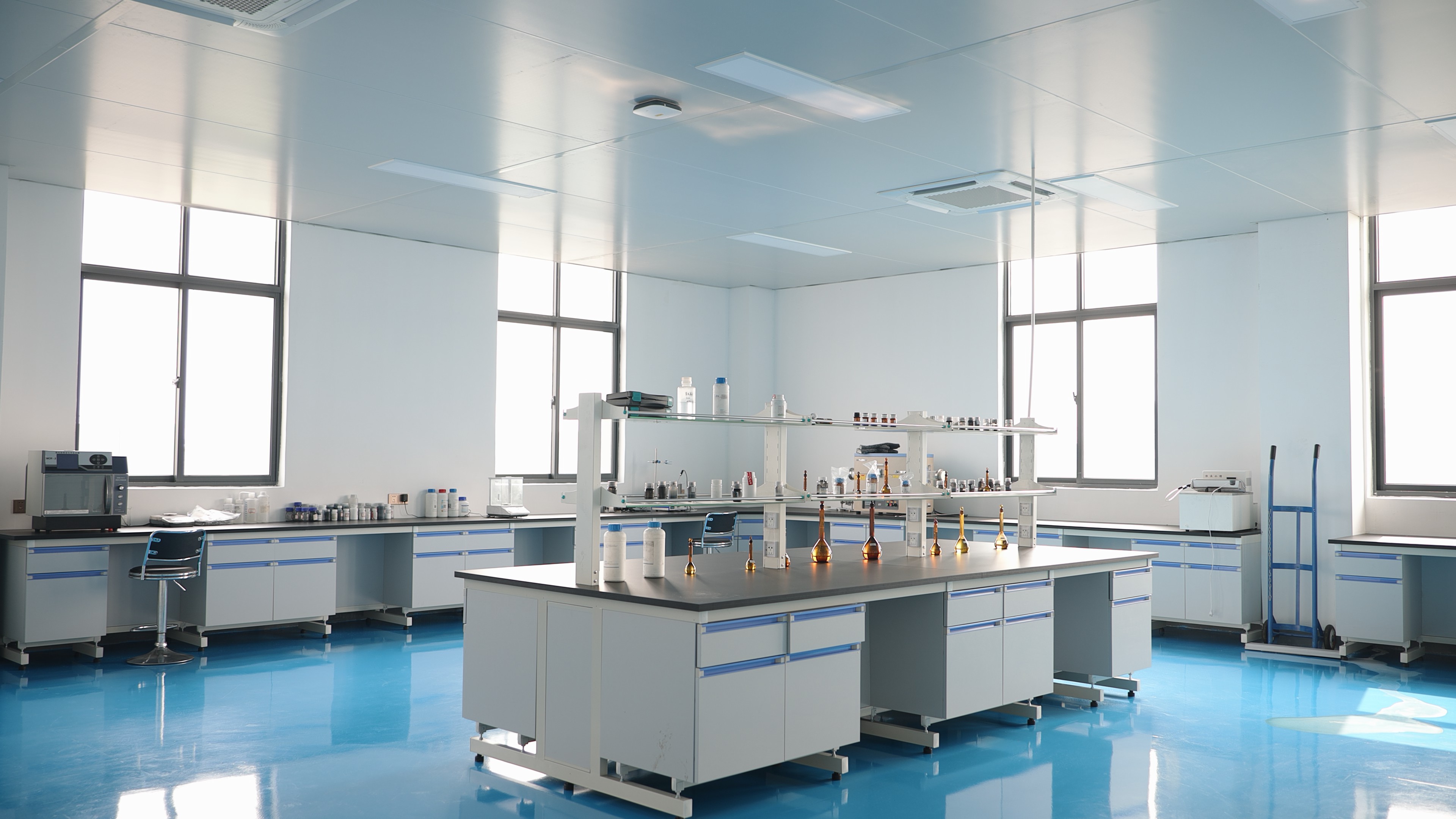
Figure 1. H2gatech's process-development laboratory provides a separate workspace for material preparation, trials, and technical review.
Process Development Starts With a Controlled Input
A custom MEA project should not begin with a generic material name or external dimensions alone. The useful starting point is a controlled design input: application, active area, membrane, anode and cathode catalyst requirements, loading basis, GDL or porous-transport-layer interface, frame or gasket concept, operating window, and acceptance method. These inputs determine which variables require trials and which requirements must remain fixed.
In the laboratory stage, the purpose is not merely to make one sample that performs well once. It is to understand whether the materials can be processed together, whether dimensions and interfaces match the customer's hardware, and which settings need a defined working range. DOE-supported manufacturing research similarly emphasizes the relationship between catalyst-ink properties, coating parameters, electrode structure, manufacturing variability, and final MEA performance.
H2gatech's available customization scope is introduced on the membrane electrode assembly product page.
From a Successful Sample to a Transferable Production Route
A laboratory result becomes useful for manufacturing only when it can be translated into instructions that another trained operator and the selected equipment can follow. For a custom project, the handover should identify the approved material grades, lot-record fields, drawing revision, active and outer dimensions, anode/cathode orientation, loading definition, equipment recipe or parameter window, in-process checks, final acceptance method, and packaging requirements.
This is also the point at which customer approval matters. If a change is made after sample qualification—such as a different membrane grade, catalyst source, GDL, frame film, adhesive, or loading basis—the effect should be reviewed instead of assuming the replacement is equivalent. A controlled production route preserves the approved design intent while still allowing documented improvement when evidence supports a change.
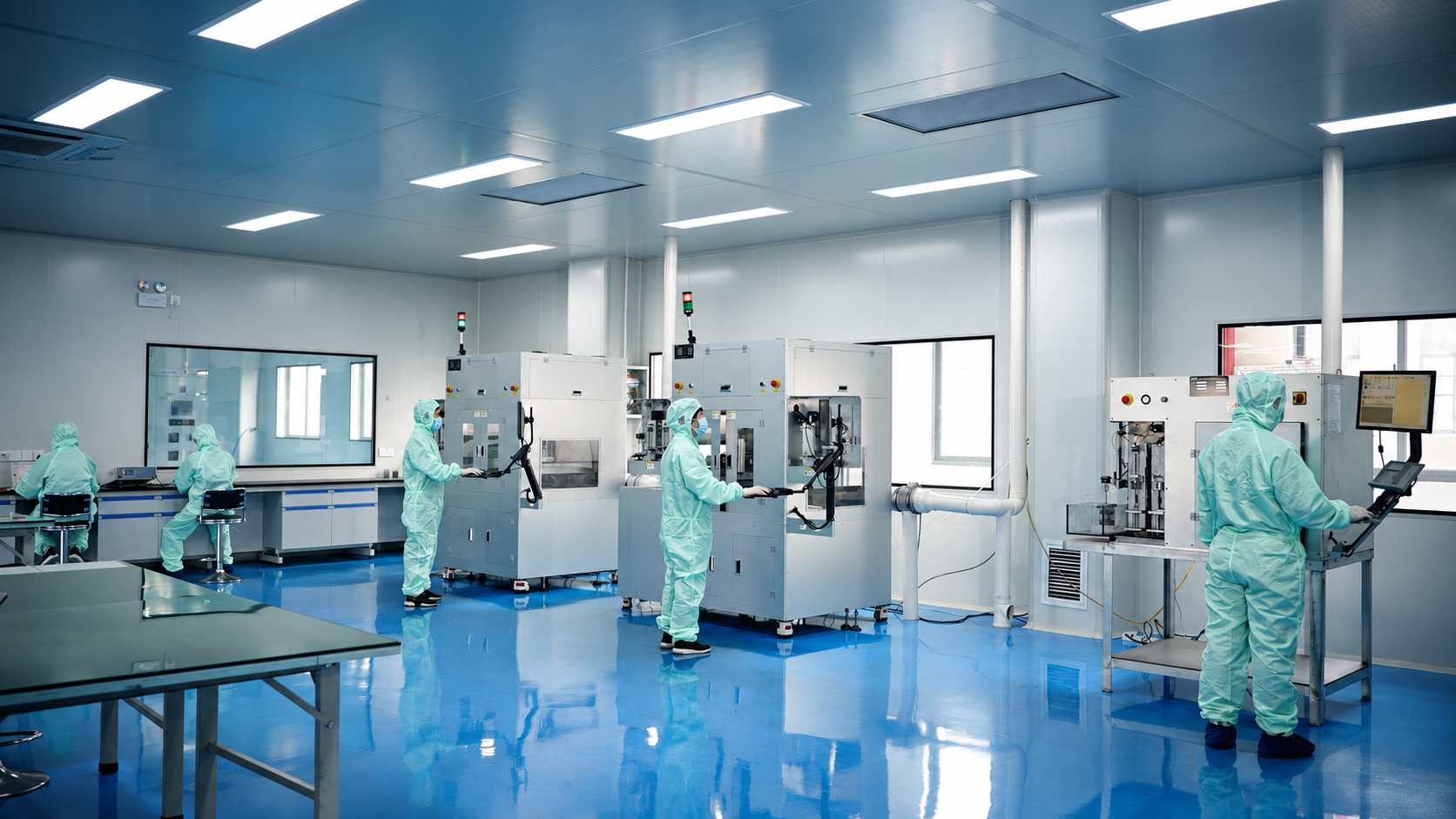
Figure 2. H2gatech operators work at multiple enclosed equipment stations within a controlled production environment.
What a Controlled Production Environment Means Here
For this article, controlled production environment is a factual description of the photographed work area, not a cleanroom-class claim. The visible controls include dedicated rooms, cleanable surfaces, protective clothing, organized workstations, enclosed equipment, and operator terminals. These features help reduce avoidable handling variation and support disciplined material flow, but the applicable cleanliness, temperature, humidity, and contamination limits must be defined by the product and customer requirement.
That distinction matters because MEA materials can react differently to moisture history, particles, handling pressure, storage time, and exposure conditions. A professional supplier should be able to explain what is controlled for the specific product without relying on an unverified room-class label as a substitute for process evidence.
Equipment and Operator Oversight Work Together
Enclosed and automated equipment can improve the repeatability of motion, timing, pressure, positioning, and recipe execution where those functions are designed into the station. It can also reduce unnecessary direct handling. Automation alone, however, does not guarantee a conforming MEA. Input materials, drawings, fixture condition, approved settings, operator actions, maintenance status, inspection methods, and data review still determine whether the process remains under control.
The H2gatech factory photographs show this combined approach: personnel operate terminals, observe equipment status, and work across defined stations. For buyers, this is more meaningful than a simple claim that production is automated. The useful questions are which parameters are controlled, how a setup is approved, what is recorded for the lot, and what happens when a result is outside the agreed limit.
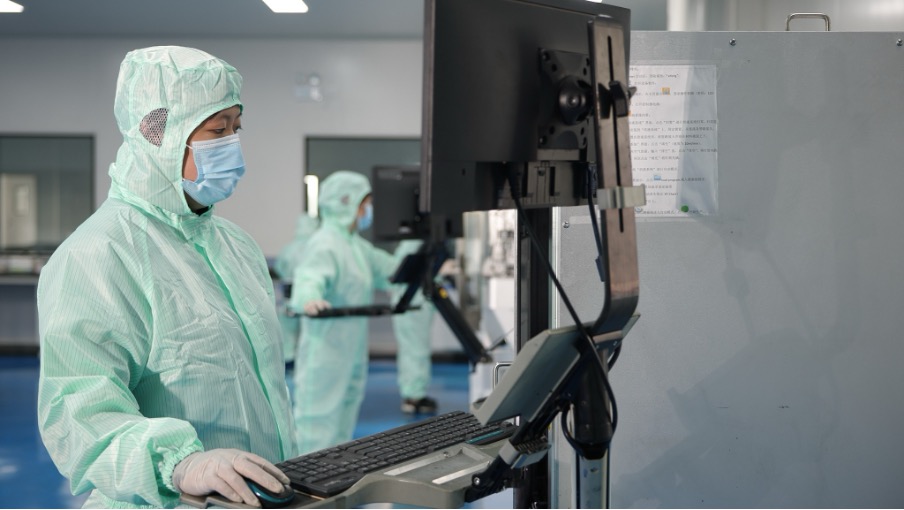
Figure 3. Operator oversight remains part of equipment-assisted production, including setup confirmation, status monitoring, and response to process information.
The Production Route Depends on the MEA Architecture
Not every MEA follows the same route. A catalyst-coated membrane, a 3-layer MEA, a 5-layer MEA with GDLs, and a framed or sealed assembly contain different interfaces and may require different handling, joining, alignment, and inspection decisions. Fuel-cell MEAs and PEM-water-electrolysis MEAs also use different electrode and transport-layer materials. The process route should therefore follow the approved product structure rather than forcing every project through one generic recipe.
For fuel-cell configurations, see H2gatech's MEA for hydrogen fuel cells.
For electrolysis configurations, see H2gatech's MEA for PEM water electrolysis.
A Practical Development-to-Production Control Map
Stage | Controlled information | Decision purpose |
1. Technical input | Drawing, application, layer structure, materials, loading basis, operating conditions | Resolve missing or conflicting requirements before sampling. |
2. Development trial | Material compatibility, geometry, processing response, sample observations | Record what was tested and which variables were changed. |
3. Sample approval | Approved construction and agreed evaluation result | Freeze the reference design and acceptance basis. |
4. Production setup | Current drawing, material lots, equipment condition, approved parameter window | Prevent an obsolete or incomplete setup from entering production. |
5. In-process checks | Orientation, alignment, surface condition, dimensions, or other project controls | Detect drift before additional material and processing are added. |
6. Final release | Specified inspection results, identification, documents, packaging | Link shipped parts to the approved project requirements. |
Quality Control Begins Before Final Inspection
A final visual check cannot recover the cost of catalyst, membrane, GDL, frame material, and processing already added to a defective part. DOE manufacturing work has therefore focused on detecting defects and variation in membrane, catalyst-coated membrane, GDE, and GDL materials during or before production. The general lesson is straightforward: place checks near the process step that creates the risk, then connect the result to a material lot and production record.
For H2gatech projects, the buyer-facing acceptance scope can include appearance, dimensions, surface or electrical-resistance checks, catalyst-loading verification by an agreed method, and project-specific documentation. The exact inspection method, sampling plan, limits, and certificate fields should be agreed in the quotation or approval stage. A supplier should not promise a tolerance or inspection accuracy that has not been defined and validated for that product.
Buyer Checklist for Reviewing an MEA Manufacturer
Review area | Question to ask |
Design transfer | Can the supplier turn the RFQ and drawing into a controlled, revision-based production specification? |
Material identity | Are membrane, catalyst, GDL/PTL, frame, adhesive, and loading bases clearly defined? |
Process evidence | Can the supplier explain which variables are controlled without disclosing proprietary know-how? |
Sample approval | Will the approved sample, test conditions, and acceptance method be recorded before scale-up? |
Inspection | Are inspection items, methods, limits, sampling, and required documents agreed? |
Traceability | Can shipped parts be linked to the drawing revision and relevant material or production records? |
Change control | Will material, process, or specification changes be reviewed before substitution? |
Frequently Asked Questions
Is the photographed H2gatech area an ISO-classified cleanroom?
This article does not claim a specific cleanroom class. It uses the term controlled production environment because the photographs show dedicated rooms, protective garments, organized work areas, and enclosed equipment. If a project requires a formal room classification, request the applicable verified document separately.
Does automated equipment guarantee consistent MEA quality?
No. Equipment can improve repeatability of defined actions, but consistency also depends on controlled inputs, approved settings, operator training, maintenance, inspection, and response to out-of-limit results.
Can H2gatech manufacture a custom CCM or MEA?
H2gatech's product pages describe customization of membrane type, catalyst system or loading, active area, and related MEA construction. A workable quotation still requires a drawing, layer definition, operating conditions, quantity, and acceptance requirements.
Are fuel-cell and electrolyzer MEAs made with the same materials?
No. Their reaction environments, catalyst systems, transport layers, and interfaces differ. Each architecture needs its own material selection, process route, and validation plan.
What should a buyer send before requesting samples?
Send the application, drawing, active and outer dimensions, membrane, catalyst and loading basis, GDL or PTL, sealing concept, operating window, quantity, and the test or inspection method that will be used for approval.
Discuss a Controlled Custom MEA Project With H2gatech
H2gatech supports custom MEA and CCM projects for hydrogen fuel cells, PEM water electrolysis, research, and specialized electrochemical applications. To begin an engineering review, provide the application, drawing, intended layer structure, approved or preferred materials, catalyst-loading basis, operating conditions, sample quantity, and acceptance method. Contact H2gatech to align the specification, sample plan, and production requirements before manufacturing begins.
Technical References
• U.S. DOE - In-Line Quality Control of Polymer Electrolyte Membrane Materials - defect detection and production-line quality-control research for membranes, CCMs, GDEs, and GDLs.
• NREL - Roll-to-Roll Advanced Materials Manufacturing Lab Collaboration - scale-up work connecting multilayer coating, metrology, characterization, and device testing.
• NREL - Material-Process-Performance Relationships in PEM Catalyst Inks and Coated Layers - links among manufacturing parameters, variability, electrode structure, performance, and durability.