
Fuel Cell MEA Quality Inspection Before Shipment
The membrane electrode assembly, or MEA, is a critical component of a PEM fuel cell. Its surface condition, dimensions, electrical consistency, and sealing quality can affect cell assembly and fuel cell performance.
At H2gatech, each batch of fuel cell MEAs is inspected according to its product structure, drawing, and customer requirements. The process includes clean handling, full-sheet inspection, surface resistance testing where applicable, individual visual inspection, and final packaging checks.
1. Clean Handling
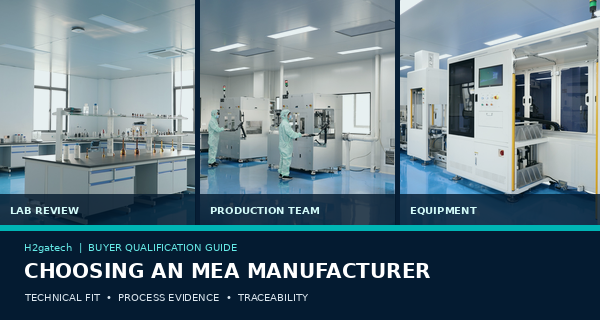
MEA production, inspection, and packaging are carried out in a clean working area. Operators wear clean gloves, masks, and protective clothing during handling. Worktables, testing equipment, tools, and packaging surfaces are cleaned before use to reduce dust and surface contamination.
Gloves are replaced regularly to prevent contamination from unrelated equipment or materials.
2. Full-Sheet Visual Inspection
Before individual MEAs are separated, the complete sheet is checked for:
· Surface uniformity
· Active-area position
· Sealing-frame alignment
· Wrinkles or deformation
· Visible contamination
· Cutting or lamination abnormalities
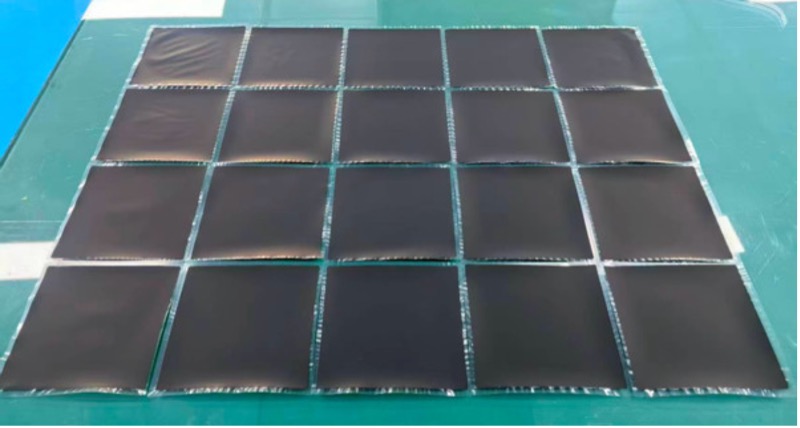
Full-sheet inspection helps identify repeated surface or manufacturing issues before the MEAs enter the next process.
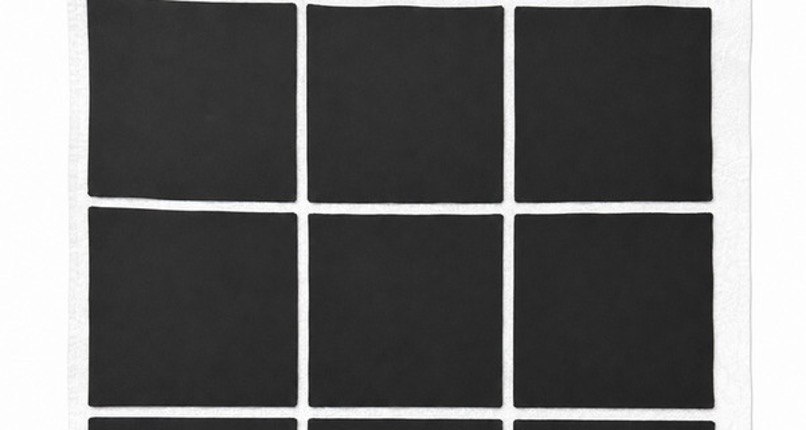
Full-sheet visual inspection after MEA production.
3. Surface Resistance Testing
For applicable MEA and gas diffusion layer configurations, surface resistance is measured at different positions across the full sheet. The results help monitor the electrical consistency of different active areas and are compared with the applicable internal specification or customer-approved range.
If an abnormal value is detected, the corresponding area is marked for further inspection. Surface resistance testing is an additional quality-control method and does not replace complete electrochemical or single-cell performance testing.
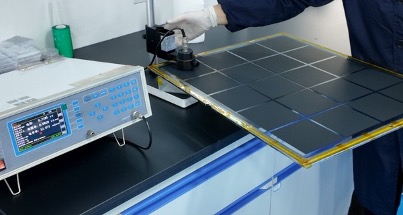
Surface resistance testing at different positions across a full MEA sheet.
4. Individual Front-and-Back Inspection
After cutting, each MEA is inspected individually on both sides. The inspector checks the active area, sealing frame, transition area, corners, and outer edges.
· Surface marks or contamination
· Scratches and pressure marks
· Wrinkles or local deformation
· Foreign material
· Damaged edges
· Sealing-frame defects
· Incorrect dimensions
Any MEA with an uncertain appearance is separated for further review and is not packaged directly.
Individual MEAs arranged for front-and-back visual inspection.
5. Final Inspection and Packaging
Qualified MEAs are organized carefully before packaging. Depending on the product structure, clean protective liners or separation materials may be used to prevent direct contact between active surfaces.
Before sealing the package, the following items are confirmed:
· Product appearance
· Quantity and dimensions
· Part number and batch information
· Packaging condition
· Required quality documents
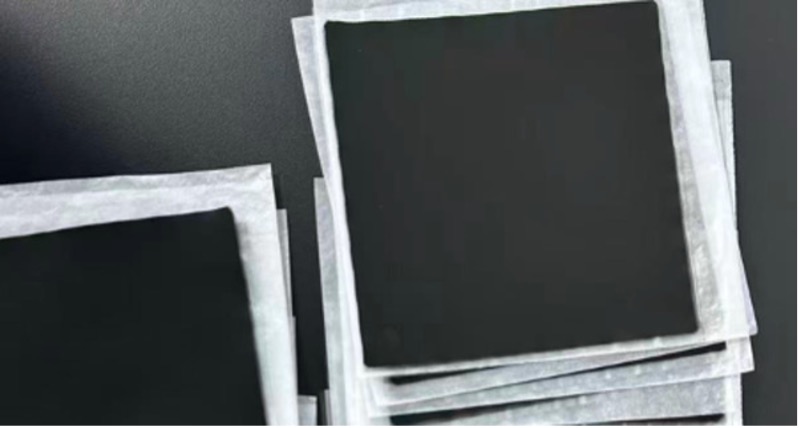
Qualified MEAs organized for final inspection and packaging.
How Are Surface Marks Evaluated?
A visible surface mark does not always mean that an MEA is defective. Some marks may be related to surface pressure, protective liners, packaging materials, or differences in surface gloss under certain lighting conditions.
When a mark is found, the inspection normally considers:
· Its position and size
· Whether it is inside the active area
· Whether the surface has been scratched or compressed
· Whether the catalyst layer or GDL is damaged
· Whether sealing or dimensions are affected
· Whether additional testing is required
Normal lighting and angled lighting can be used together to identify shallow marks, wrinkles, and differences in surface appearance.
What Information Should a Buyer Provide?
If a customer finds an unusual surface mark after receiving the MEAs, the following information will support a faster investigation:
· Order or batch number
· Number of affected pieces
· Clear photographs under normal and angled lighting
· Front or back side of the MEA
· Location of the mark
· Packaging condition upon arrival
The reported condition can then be compared with production records, inspection results, packaging materials, and retained samples when available.
Custom Fuel Cell MEA Manufacturing
H2gatech supplies customized MEAs for PEM fuel cells, water electrolysis, electrochemical sensors, and other electrochemical applications.
Available customization options include:
· Membrane type and thickness
· Active area
· Catalyst type and loading
· Three-layer or five-layer structure
· Gas diffusion layer
· Sealing material
· External dimensions and hole positions
· Quality inspection requirements
To request a custom MEA quotation, please send the application, drawing, active area, catalyst-loading requirement, operating conditions, and estimated quantity.
Contact H2gatech to discuss your fuel cell MEA specification and quality-control requirements.
Optional Technical References
· FUMATECH Technical Data Sheets: https://www.fumatech.com/en/technical-data-sheets/
· ISO 9001 Quality Management Systems: https://www.iso.org/standard/62085.html
· Gore - How MEA Design Supports Fuel Cell Durability: https://www.gore.com/resources/how-mea-design-can-make-fuel-cells-viable-option-heavy-duty-vehicles