
Hydrogen Energy Demonstration
Integrated Green Hydrogen Production and Fuel Cell Power Systems
As hydrogen energy moves from concept to real-world deployment, integrated demonstration systems play a critical role in education, public communication, and industry training.
By visually connecting renewable power generation, hydrogen production, and hydrogen utilization, such systems help audiences clearly understand how hydrogen enables a low-carbon energy future.
Demonstrating the Complete Hydrogen Energy Value Chain
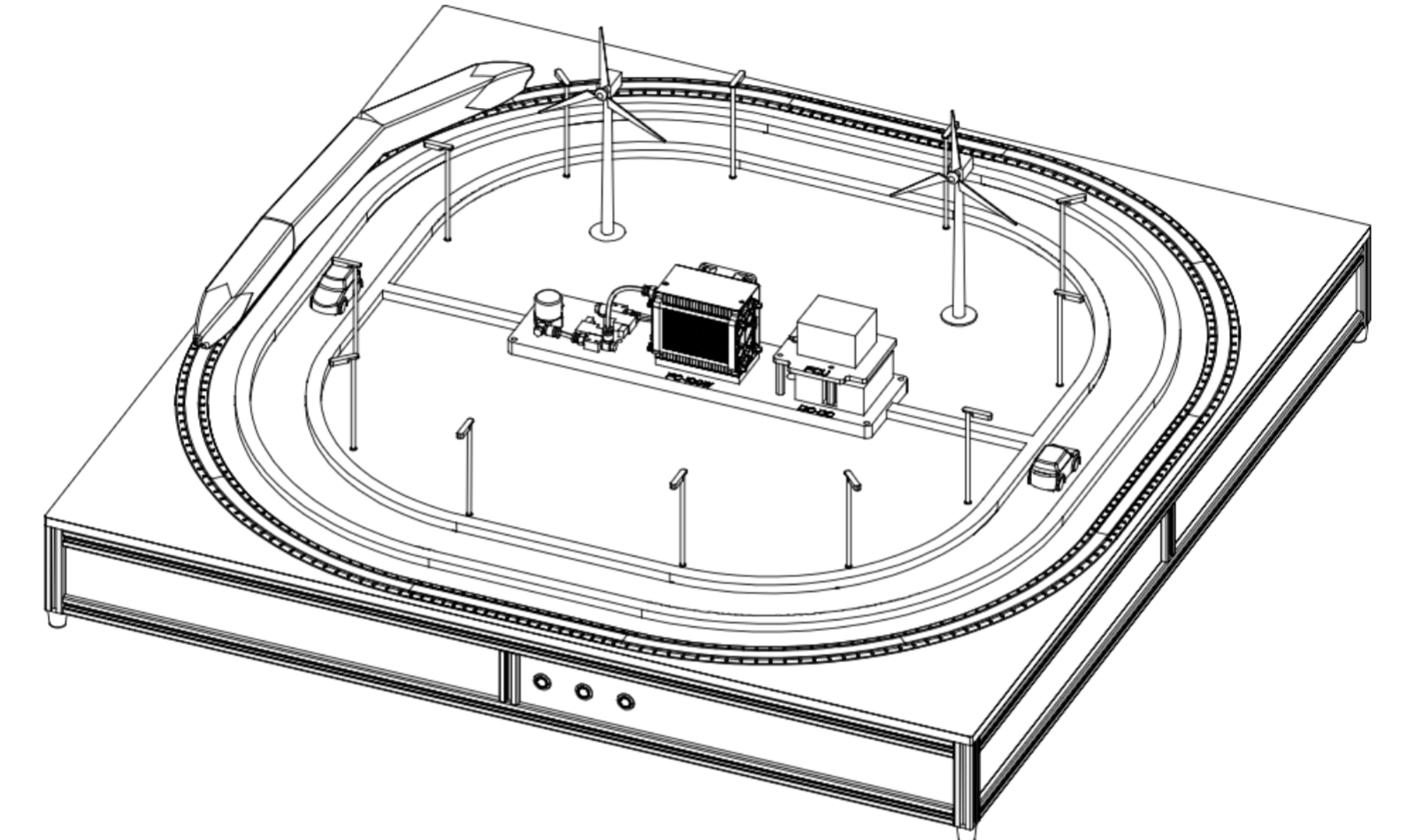
This hydrogen energy teaching and demonstration system is designed to illustrate the full hydrogen energy pathway, from renewable electricity to clean power applications.
The system is divided into two main sections:
Left side: Renewable-powered water electrolysis and hydrogen production
Right side: Hydrogen fuel cell power generation and transportation applications
Together, they form a closed-loop demonstration of green hydrogen production, storage, and utilization.
Green Hydrogen Production via Water Electrolysis
On the left side of the system, electricity generated from solar energy and wind energy is supplied to a water electrolysis system.
Through electrolysis:
Electrical energy is converted into chemical energy
Water (H₂O) is split into hydrogen (H₂) and oxygen (O₂)
Hydrogen is produced without carbon emissions
This clearly demonstrates how renewable energy can be transformed into green hydrogen, addressing the intermittency challenges of solar and wind power.
Hydrogen Drying, Storage, and Delivery
After hydrogen is generated:
The gas passes through a hydrogen drying and purification process
Moisture is removed to ensure hydrogen quality
Hydrogen is then safely transported through pipelines or tubing to the fuel cell system
This stage highlights the importance of hydrogen handling, conditioning, and delivery, which are critical elements in real hydrogen infrastructure.
Hydrogen Fuel Cell Power Generation
On the right side of the demonstration system, purified hydrogen is supplied to a hydrogen fuel cell stack.
Inside the fuel cell:
Hydrogen reacts electrochemically with oxygen from the air
Electricity is generated without combustion
Water is produced as the only by-product
The fuel cell converts stored hydrogen back into electrical energy, completing the power-to-hydrogen-to-power cycle.
Powering Transportation Applications
The electricity generated by the fuel cell is used to demonstrate real transportation use cases, including:
High-speed rail systems, representing large-scale, high-reliability power demand
Hydrogen-powered vehicles, illustrating clean mobility for passenger and commercial transport
These applications help audiences visualize how hydrogen fuel cells can support zero-emission transportation, from road vehicles to rail systems.
Linking Renewable Energy and Clean Mobility
By simultaneously showcasing:
Solar power
Wind power
Water electrolysis
Hydrogen storage and delivery
Fuel cell electricity generation
Transportation applications
the system provides a clear and intuitive understanding of how hydrogen acts as a bridge between renewable energy and end-use applications.
This makes the demonstration particularly effective for:
Educational institutions and training centers
Hydrogen energy exhibitions and showrooms
Government and industrial demonstration projects
Corporate hydrogen technology displays
Application Value of Hydrogen Energy Demonstration Systems
Such integrated hydrogen demonstration platforms are not only teaching tools, but also powerful communication instruments that translate complex energy concepts into visible, understandable processes.
They help stakeholders:
Understand the role of hydrogen in energy transition
Visualize real-world hydrogen applications
Build confidence in hydrogen fuel cell technologies
By presenting hydrogen as a practical, scalable energy carrier, these systems support broader adoption of green hydrogen and fuel cell solutions.
Manufacture of Hydrogen Energy Demonstration
H2Gatch develops integrated hydrogen energy demonstration and teaching systems that showcase the complete green hydrogen pathway, including renewable energy integration, water electrolysis hydrogen production, hydrogen conditioning, and fuel cell power generation.
These systems are designed for education, training, and exhibition purposes, helping users clearly understand how hydrogen connects renewable energy with clean transportation and power applications.
Last:
Hydrogen fuel cell UAVs