

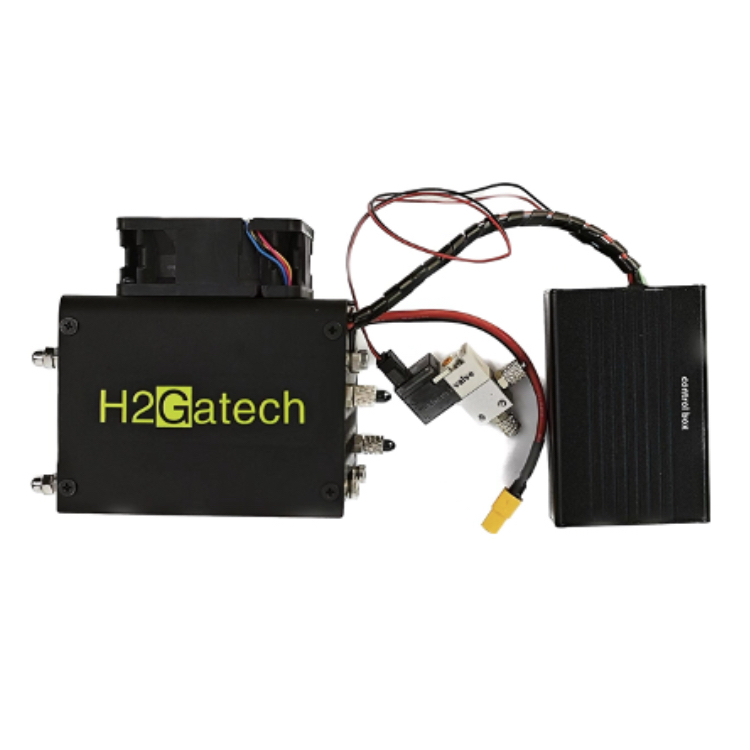
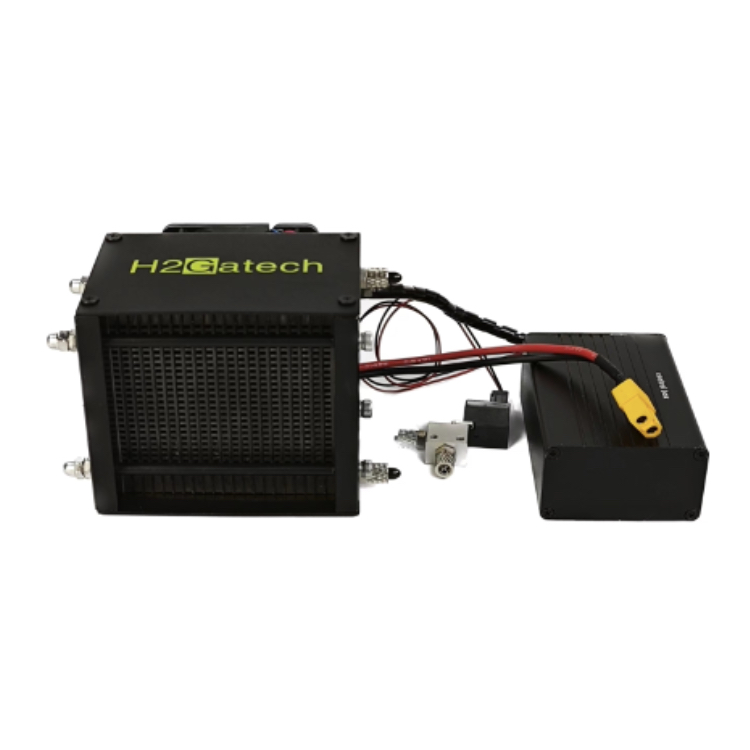
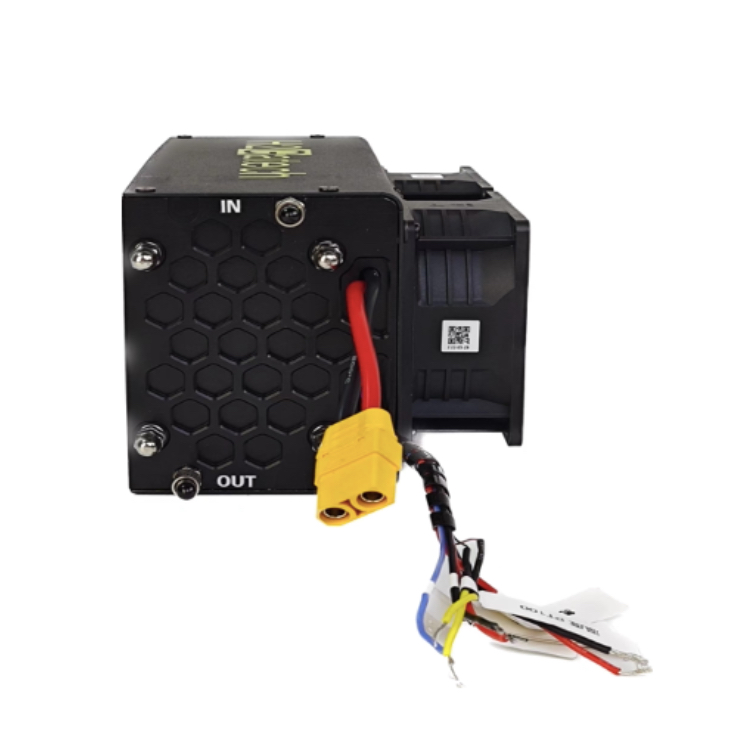
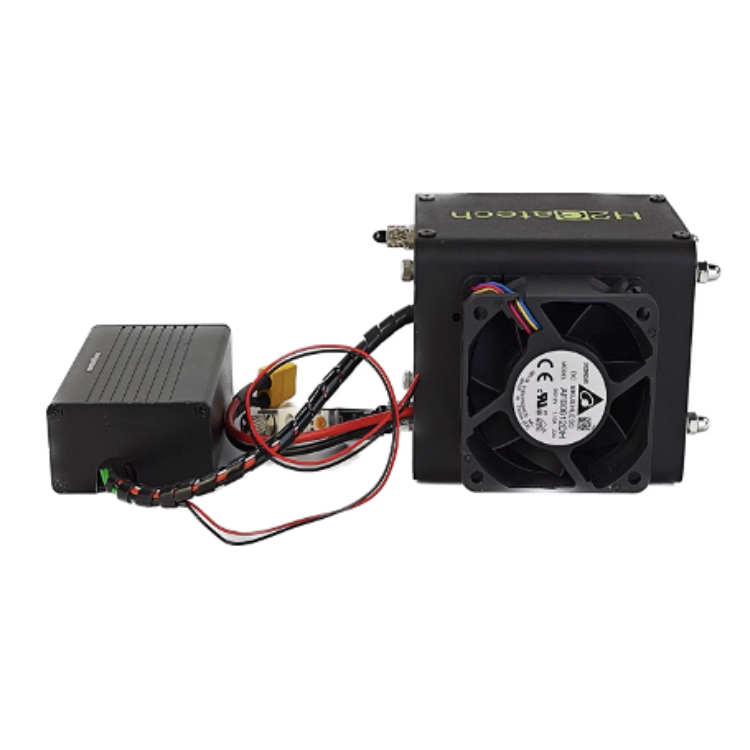
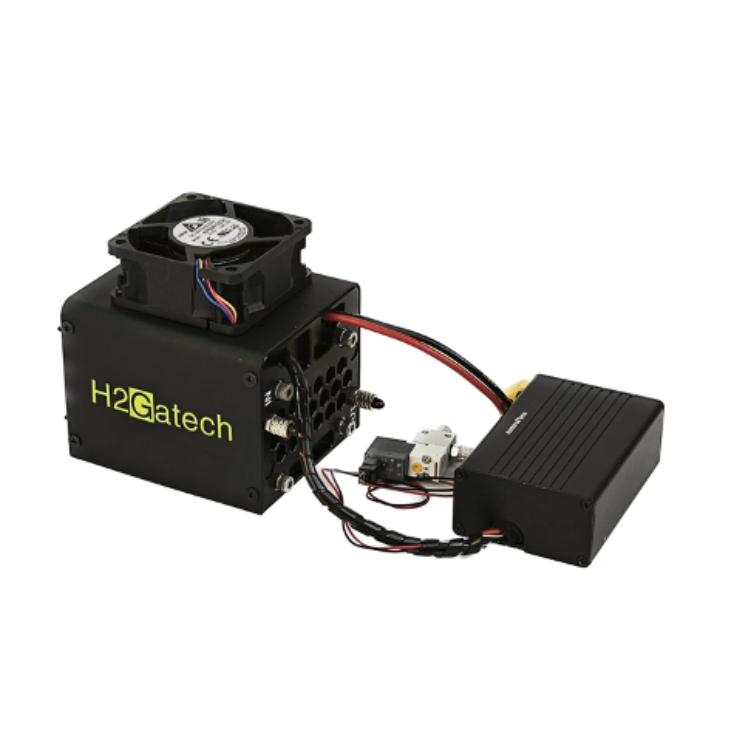
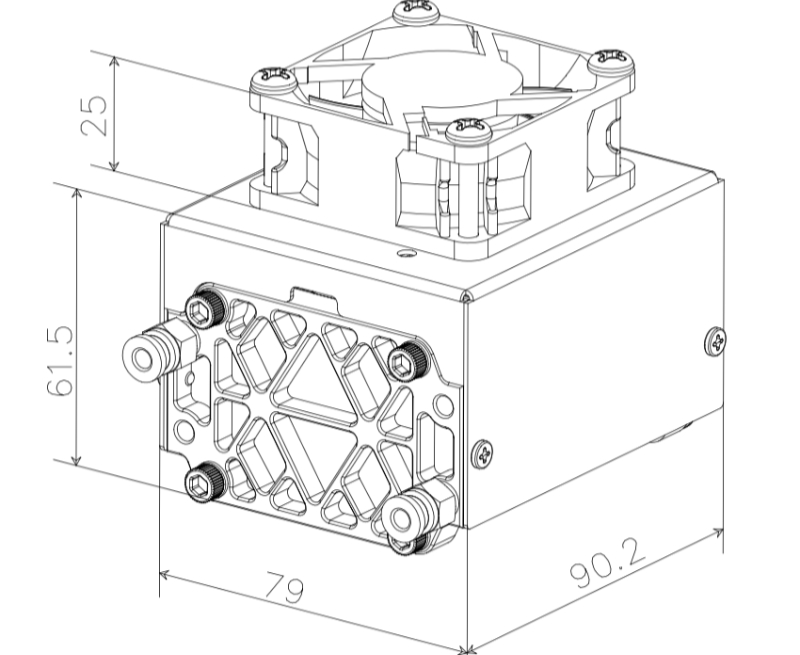
100W Air Cooled Hydrogen Fuel Cell PEM Fuel Cell
Fuel cells represent an advanced form of clean energy technology that harnesses hydrogen to produce electricity. By directly converting chemical energy into electrical power, fuel cells operate with high efficiency and zero harmful emissions.

Number of Cells
This fuel cell stack is composed of 20 fuel cells.

Hydrogen Pressure
Hydrogen must be fed into the fuel cell stack at a pressure of 0.04-0.06 Mpa.

Ambient Temperature
The fuel cell stack operates best in a temperature ranging from -5~35° C.

Humidification
This fuel cell stack uses self-humidification.

FC Stack Weight
The stack (including fan and casing) weighs 630g.

Controller Weight
The weight of the controller is 180g.

System Efficiency
At 12 volts the efficiency of the system is over 40%.
External power supply
It can be provided by H2Gatech or sourced by the customer.
Unlock the Power of Hydrogen
Fuel cells enable clean and efficient electricity generation by converting hydrogen’s chemical energy directly into electrical power—without combustion. This process delivers high efficiency, silent operation, and zero harmful emissions, producing only water as a byproduct. Hydrogen is a versatile and sustainable energy carrier. It is abundant, non-toxic, and renewable, making it suitable for a wide range of applications—from portable devices and backup power systems to transportation and building energy solutions. By harnessing hydrogen, fuel cell technology opens a reliable path toward a low-carbon energy future.
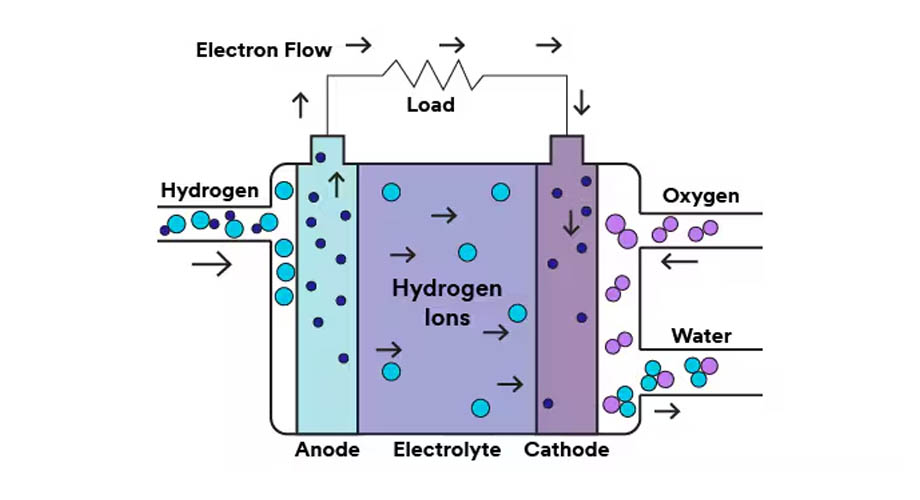

Hydrogen - energy without combustion
With a fuel cell, you can convert hydrogen into electric current without combustion. Fossil fuels are converted into usable energy through combustion. The energy released during combustion is inherently difficult to capture and inefficient. It also produces carbon dioxide, which cannot easily be converted back into a usable fuel. A fossil fuel combustion engine at a power plant is only about 30 to 40% efficient. This means it coverts only 30 to 40% of the energy in the fossil fuels to usable energy (electricity). Engines in a car are even less efficient, and reach the level of 15 to 20% of efficiency. Where does the rest of the energy go? It escapes as heat, vibration, and noise. On the other hand, fuel cells can operate at 40 to 65% efficiency. This means that they can convert 40 to 65% of the energy contained in hydrogen into electricity.